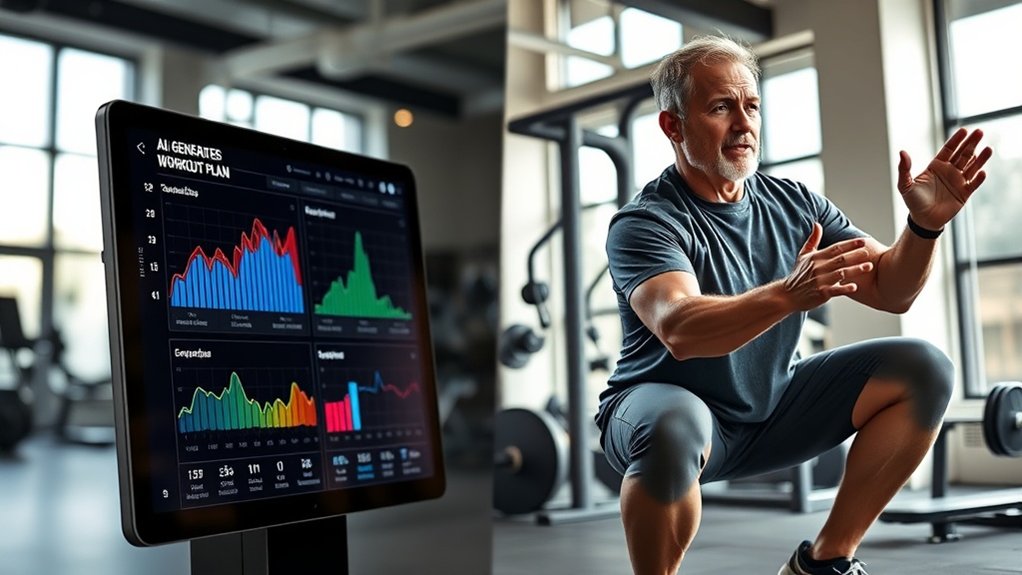
AI workout plans offer you 24/7 accessibility and affordability ($0-$20 monthly versus $30-$120 per session for trainers), with algorithms that adapt to your progress through data analysis. However, they can’t correct your form in real-time, provide emotional support, or adjust to your mood and unspoken needs. Human coaches excel at injury prevention, motivation, and reading body language, but lack AI’s convenience and cost-effectiveness. Your ideal choice depends on your budget, schedule flexibility, and whether you value data-driven consistency or personalized human connection—factors we’ll investigate further below.
How AI-Powered Workout Plans Work and What They Offer
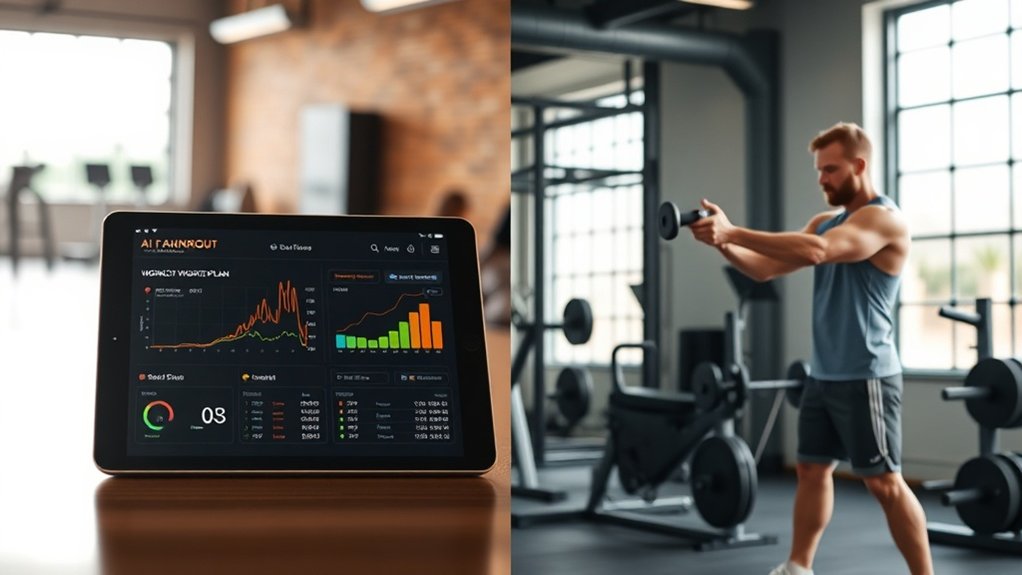
AI-powered workout plans function as your digital personal trainer, analyzing multiple data points—from your age and weight to your fitness goals and past performance—to generate customized exercise routines through sophisticated algorithms and machine learning models.
The algorithm customization continuously refines your program, adapting in real time as you provide feedback and log your progress. You’ll get 24/7 access to workouts without scheduling appointments, giving you complete flexibility in when and where you train.
Many platforms include real-time form correction and movement analysis, helping you maintain proper technique while reducing injury risk. This technology-driven approach improves user engagement through interactive features and progress tracking.
Best of all, you’ll pay minimal subscription fees—or nothing at all—making professional-grade fitness guidance accessible regardless of your budget.
The Advantages of AI Personalized Training Programs
Beyond understanding the mechanics of AI fitness technology, you’ll want to know exactly what benefits these systems bring to your training regimen.
| Feature | AI Training | Impact |
|---|---|---|
| Accessibility | 24/7 availability | Train anytime, anywhere |
| Cost | Noticeably lower pricing | Makes fitness democratized |
| Adaptation | Real-time adjustments | Optimizes performance continually |
| Analytics | Detailed progress tracking | Quantifies improvements precisely |
AI personalized programs deliver immediate form corrections and performance metrics, boosting workout efficiency through data-driven insights. Gamification elements boost user engagement, transforming routine exercises into compelling challenges. You’ll access professional-grade training at a fraction of traditional costs while maintaining complete schedule flexibility.
However, data privacy remains a consideration—your biometric information and workout patterns require secure handling. These systems excel at delivering consistent, evidence-based training that adapts as you progress.
Where AI Coaching Falls Short: Key Limitations
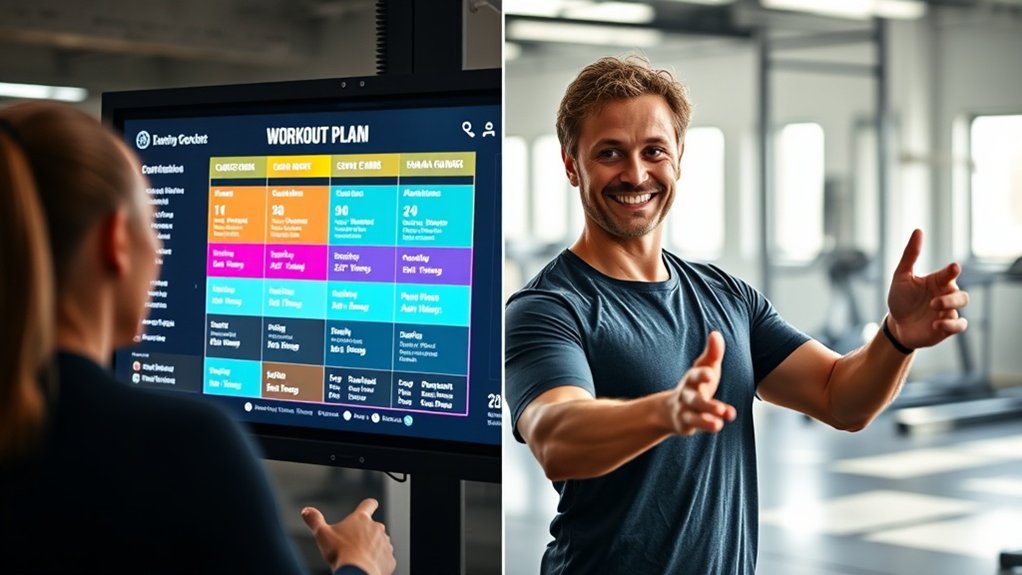
While AI training systems offer impressive technological capabilities, they exhibit critical gaps that impact training quality and safety.
You’ll miss real-time form corrections that prevent injuries—something human trainers provide instantly through direct observation. The user experience suffers without emotional connection and motivational support, which often leads to decreased adherence to your fitness routine.
AI limitations become evident when dealing with personal circumstances like existing injuries or mental health factors. The algorithms rely heavily on data analysis, overlooking emotional elements that drive your motivation and progress.
You’re left with a mechanical workout experience that can’t adapt quickly to unexpected performance changes or mood shifts. While AI excels at planning, it can’t replicate a human trainer’s flexible, personalized approach.
The Unique Value Human Coaches Bring to Fitness Training
While AI excels at data processing and pattern recognition, human coaches deliver two critical elements that algorithms can’t replicate: genuine emotional connection and instant physical correction.
You’re far more likely to push through a challenging workout when a real person is encouraging you in the moment, reading your body language, and adapting their motivational approach to your psychological state.
In the same way, a human trainer can spot subtle form issues mid-rep and provide immediate tactile or verbal cues that prevent injury—something no app notification can match in real-time effectiveness.
Emotional Support and Motivation
When your motivation hits rock bottom at 5 AM or midway through a grueling set, AI can’t read the frustration in your eyes or hear the defeat in your voice—but a human coach can. This emotional intelligence enables trainers to use targeted motivational techniques precisely when you need them most.
Research shows that social interaction with coaches increases workout enjoyment and long-term adherence to fitness programs.
Human trainers build emotional resilience by adapting sessions based on your psychological state, not just physical metrics. They’ll recognize when you’re struggling mentally and adjust accordingly—perhaps lightening the load or offering personalized encouragement.
This accountability factor proves powerful: you’re far more likely to show up when someone’s invested in your progress, creating the personal connection that transforms sporadic exercise into sustainable habits.
Real-Time Form Correction
How many gym-goers have unknowingly reinforced dangerous movement patterns simply because no one caught their form breaking down mid-set?
Human coaches excel at real-time adjustments by observing subtle body language, fatigue indicators, and compensatory movements that signal trouble. Research shows immediate feedback from personal trainers improves performance outcomes by up to 20% through dynamic observation and correction.
While AI relies on algorithms and user input, it can’t detect the slight shoulder elevation during a deadlift or recognize when you’re recruiting the wrong muscle groups.
Human coaches provide nuanced biomechanical insights and muscle activation cues that prevent injury before it occurs. Their physical presence enables split-second corrections, making injury prevention more effective than delayed algorithmic assessments could achieve.
Comparing Costs, Accessibility, and Long-Term Effectiveness
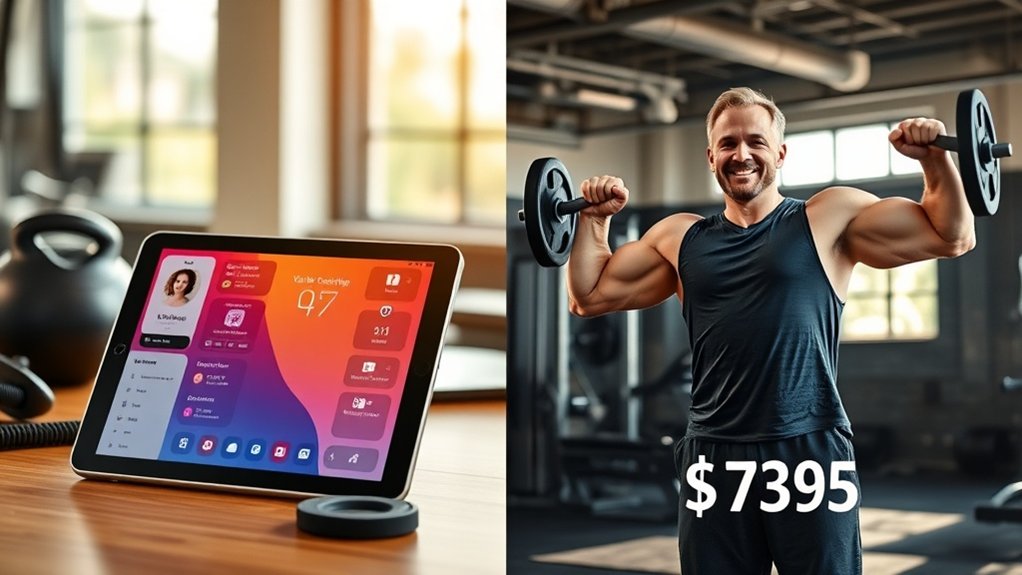
As fitness technology evolves, the financial gap between AI-powered workout platforms and human coaching has become increasingly stark. You’ll find AI plans ranging from free to $20 monthly, while trainers charge $30-$120 per hour—a substantial cost comparison.
The accessibility analysis reveals AI’s advantage: you can exercise anytime, anywhere, versus scheduling constraints with human coaches.
However, long-term effectiveness presents a nuanced picture. AI delivers consistent, data-driven personalization and adapts as you progress. Yet it can’t replicate the emotional support and accountability that human trainers provide.
While AI efficiently guides you toward fitness milestones, human coaching encourages relationships that often lead to sustained engagement. Your ideal choice depends on whether you prioritize budget flexibility and convenience or value the motivational dynamics of personal interaction.
Choosing Between AI and Human Coaching for Your Fitness Goals
Your fitness level directly influences which coaching method will serve you best—beginners often need the form corrections and accountability that human trainers provide, while experienced athletes can effectively use AI’s data-driven programming.
Budget considerations matter greatly: if you’re spending $30-$120 per hour on a trainer but can’t commit to regular sessions, you’ll see better results with a $20/month AI plan you’ll actually use consistently.
Time constraints should also shape your decision, as AI’s 24/7 availability eliminates scheduling friction, while human coaching requires coordinating sessions that fit both your and your trainer’s calendar.
Assess Your Fitness Level
Before diving into AI-powered apps or booking sessions with a personal trainer, you’ll need an honest evaluation of where you currently stand in your fitness journey. Understanding your baseline through fitness assessment techniques helps determine which coaching method aligns with your needs.
Consider these key factors when determining personal goals:
- Current mobility and strength limitations that might require immediate professional observation
- Existing health conditions necessitating customized programming and medical clearance
- Previous exercise experience influencing your need for form correction versus autonomous training
- Motivation style—whether you thrive with accountability partners or self-directed progress tracking
- Budget constraints affecting your long-term commitment to either option
This self-evaluation clarifies whether you’ll benefit more from AI’s data-driven flexibility or human coaching’s personalized guidance and real-time adjustments.
Budget and Time Constraints
The financial and scheduling realities of your fitness routine often become the deciding factor between AI and human coaching. A clear cost comparison reveals substantial differences: AI apps range from free to under $20 monthly, while personal trainers charge $30-$120 per session. Time flexibility is where AI particularly excels—you’ll access workouts 24/7 without scheduling appointments.
| Factor | AI Coaching | Human Coaching |
|---|---|---|
| Monthly Cost | $0-$20 | $120-$480+ |
| Availability | 24/7 on-demand | Scheduled sessions |
| Commitment | Flexible, cancel anytime | Regular appointments |
| Access Speed | Immediate | Requires booking |
If you’re budget-conscious with unpredictable schedules, AI solutions deliver accessibility. However, if you can invest more for personalized attention and real-time feedback, human coaching provides irreplaceable value despite higher costs.
Frequently Asked Questions
Can AI Workout Plans Adapt to Sudden Health Changes or Injuries?
AI workout plans can make adaptive adjustments when you report changes, but they’re limited in detecting subtle injury recovery nuances. You’ll get algorithm-based modifications, though they won’t match a human coach’s real-time assessment of your physical condition.
Do Insurance Companies Cover AI Fitness Programs or Human Trainers?
Coincidentally, insurance coverage for fitness programs is expanding just as you’re asking. You’ll find some plans offer fitness reimbursements for both human trainers and AI apps, though traditional coaching typically receives better coverage than digital alternatives currently.
What Certifications Should Human Coaches Have for Specialized Fitness Goals?
You’ll want coaches with advanced certification levels like CSCS for strength training, ACSM for medical conditions, or NASM-CES for corrective exercise. Specialized training guarantees they’ve mastered evidence-based protocols specific to your unique fitness goals.
Can AI and Human Coaching Be Combined in a Single Program?
You’ll benefit from AI integration handling data-driven personalized feedback while your human coach provides coaching synergy through emotional support and motivation strategies. This hybrid approach combines algorithmic precision with human intuition, creating evidence-based programs that adapt to your unique needs.
How Do Privacy Concerns Differ Between AI Apps and Human Trainers?
Like choosing between a locked vault and a confidential conversation, you’ll face data security risks with AI apps storing your information digitally, while human trainers present trust issues through interpersonal boundaries and potential gossip vulnerabilities.