A personalized workout plan is a strategically designed program tailored specifically to your fitness level, goals, physical limitations, and schedule. Unlike generic routines, it’s built on thorough assessments and SMART goals that create a targeted roadmap for success. You’ll benefit from faster results, better injury prevention, and built-in adaptability that prevents plateaus through precise adjustments in volume, intensity, and exercise selection. This customized approach is particularly valuable when you’re managing injuries, pursuing specific outcomes, or struggling with cookie-cutter programs that don’t address your unique needs and circumstances.
What Makes a Workout Plan “Personalized”? Core Components Explained

Personalization transforms a generic exercise routine into a powerful tool that addresses your specific needs, capabilities, and aspirations. Through customized assessments, you’ll receive evaluations of your movement patterns, body composition, past workout experiences, and available resources like time and equipment.
This data-driven approach guarantees your program matches your current fitness level while challenging you appropriately.
Goal alignment forms the foundation of your personalized plan. You’ll establish SMART goals—Specific, Measurable, Achievable, Relevant, and Time-based—that provide clear direction for your fitness journey.
Your program balances resistance training and cardio using movement patterns like squats, lunges, pushes, pulls, bends, and core exercises. As you progress, your plan adapts through modifications in intensity, volume, and exercise selection, preventing plateaus and maintaining engagement.
The Key Benefits of Training With a Personalized Workout Plan
Understanding how personalization works sets the stage for examining why it delivers superior results compared to generic programs. When your plan aligns with your specific fitness level, goals, and limitations, you’ll experience a significant motivation boost through structured routines and measurable progress tracking.
This customization enables injury prevention by accounting for past injuries and physical restrictions, confirming exercises remain safe and effective.
You’ll achieve faster results by focusing exclusively on high-impact activities that target your objectives, whether that’s weight loss, muscle gain, or endurance building.
Regular check-ins maintain accountability throughout your journey, while the elimination of unnecessary exercises maximizes efficiency.
This targeted approach creates a clear roadmap for success, making it easier to celebrate milestones and sustain long-term commitment to your fitness transformation.
When Does a Personalized Workout Plan Matter Most?

While personalized workout plans offer advantages to everyone, certain situations demand this customized approach.
You’ll find goal specificity becomes critical when pursuing targeted outcomes like weight loss or muscle gain, where generic programs simply won’t deliver ideal results. If you’re managing chronic conditions or require injury management, customization guarantees your workouts remain safe and effective without compromising your recovery.
Beginners particularly benefit from tailored plans that match their current fitness level and build sustainable habits. When you’ve hit a plateau, personalized programming introduces strategic variations that reignite progress.
Additionally, if you’re juggling a demanding schedule, customized plans adapt to your lifestyle constraints, making consistency achievable. These scenarios underscore when personalization shifts from beneficial to essential for your fitness success.
Real Examples: How Personalization Changes Your Training Variables
Your training variables—splits, volume, intensity, and exercise selection—shift dramatically based on your current fitness level and specific goals.
A beginner’s full-body routine with 5-6 movement patterns and 8-15 reps differs fundamentally from an advanced lifter’s upper/lower split featuring lower rep ranges and targeted exercises.
These personalized adjustments guarantee your workouts match your capacity while driving measurable progress toward your objectives.
Beginner vs. Advanced Splits
One of the most significant differences between beginner and advanced training lies in how workout splits distribute stress across your body throughout the week. As you progress, your personalized plan evolves from foundational beginner techniques to sophisticated advanced strategies.
| Training Variable | Beginner Split | Advanced Split |
|---|---|---|
| Frequency | 4-5 full-body sessions | 4-6 upper/lower sessions |
| Rep Ranges | 8-15 reps (technique focus) | 4-12 reps (hypertrophy/strength) |
| Rest Periods | Longer (confidence building) | Shorter (intensity maximization) |
| Progression | Static linear progression | Periodization strategies |
Beginners build strength through compound movements like squats and push-ups, while advanced athletes incorporate complex exercises like deadlifts with varied training cycles. This targeted approach prevents plateaus and optimizes recovery, assuring continuous adaptation aligned with your current capabilities.
Adjusting Volume and Intensity
As your fitness level evolves, the variables that determine workout effectiveness—volume and intensity—require systematic adjustments to match your body’s changing capabilities.
Volume adjustments typically involve progressing from 2-3 sets as a beginner to 4-6 sets for advanced training, making certain adequate stimulus without overtraining.
Intensity modifications follow a parallel trajectory: you’ll start with 8-15 reps using moderate weights to build foundational strength and endurance, then shift toward lower rep ranges with heavier loads for hypertrophy as you advance.
Rest periods also demand personalization—60-90 seconds suffices for beginners, while advanced lifters benefit from 2-3 minutes between demanding sets.
Regular monitoring of personal feedback and progress enables precise calibration of these variables, preventing plateaus and reducing injury risk while maintaining sustainable training momentum.
Exercise Selection by Goals
When selecting exercises for your personalized program, the primary determining factor isn’t popularity or trends—it’s the direct alignment between movement patterns and your specific physiological goals. Different exercise types produce distinct adaptations, making goal alignment essential for superior results.
| Primary Goal | Exercise Types | Physiological Rationale |
|---|---|---|
| Muscle Building | Compound movements (squats, deadlifts) | Maximizes mechanical tension and hypertrophic stimulus |
| Fat Loss | HIIT + strength training combinations | Raises metabolic rate and preserves lean mass |
| Endurance | Steady-state aerobic activities | Improves cardiovascular efficiency and oxidative capacity |
| Joint Rehabilitation | Low-impact resistance (swimming, bands) | Maintains strength without exacerbating inflammation |
Your personalized plan strategically combines these exercise types based on your limitations, current fitness level, and desired outcomes—not arbitrary programming conventions.
Who Should Use a Personalized Workout Plan (And Who Might Not Need One)
You’ll gain the most from a personalized workout plan if you’re pursuing specific fitness goals, managing injuries or health conditions, or struggling to progress with generic routines.
However, customization isn’t universally necessary—some individuals thrive with standard programs, particularly when they’re maintaining current fitness levels or checking out exercise without defined objectives.
Understanding whether you’re an ideal candidate for personalization or someone who can succeed with generic plans requires examining your current situation, goals, and training experience.
Ideal Candidates for Customization
While generic workout programs serve many casual exercisers adequately, personalized workout plans become essential when you’re pursuing specific, measurable fitness goals or managing individual constraints that standard programs can’t address.
You’re an ideal candidate for customization if you fall into these categories:
- Specific fitness goals: You’re targeting weight loss, muscle hypertrophy, or endurance improvements that require structured progression and strategic exercise selection.
- Health conditions or limitations: You’re managing injuries, chronic illnesses, or physical restrictions that necessitate exercise modifications for safe, effective training.
- Plateau or inexperience: You’ve stalled in your progress and need fresh stimulus, or you’re beginning your fitness journey and require structured guidance to build proper movement patterns and consistent habits.
Conversely, experienced athletes comfortable with self-programming may not require professional customization.
When Generic Plans Work
Generic workout plans function effectively for beginners with no special limitations who simply need consistent movement patterns to establish baseline fitness habits.
If you’re checking out casual fitness without intensive performance targets, these standardized programs provide sufficient structure for maintaining general health. You’ll find generic plan benefits particularly valuable when you possess a good baseline fitness level and low injury risk, as the variety of exercises supports overall conditioning without requiring individualized modifications.
These plans also serve as practical interim solutions if you’re not ready to commit to personalized programming but want regular physical activity.
However, once you develop specific goals, encounter injuries, or identify unique fitness requirements, you’ll need customized approaches. Generic frameworks lack the precision necessary to address individual challenges, optimize performance outcomes, or accommodate physical limitations that demand specialized exercise selection and progression strategies.
How to Recognize True Personalization: A Simple 4-Step Checklist
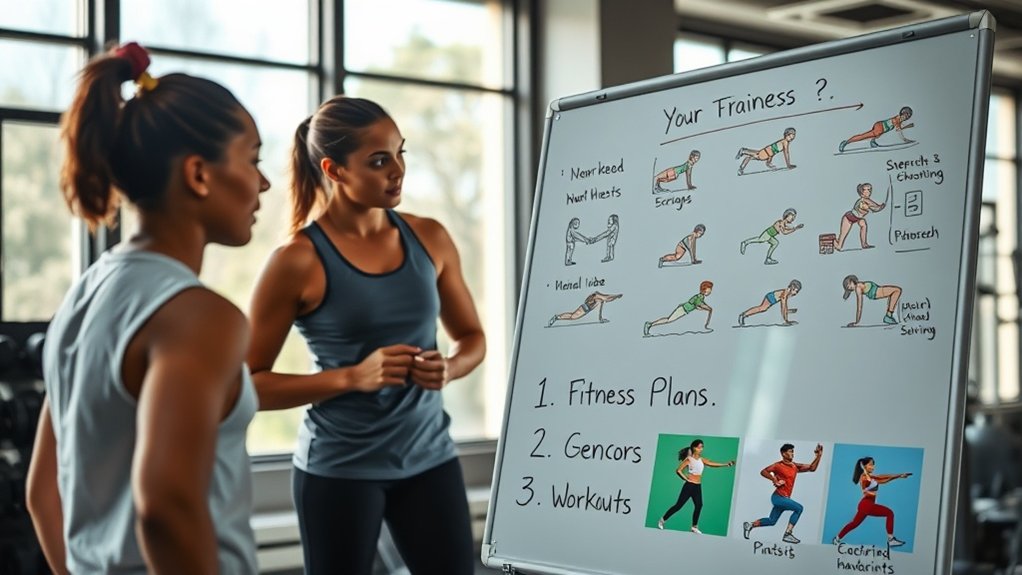
Most fitness apps and trainers claim their programs are “personalized,” but true customization goes far deeper than plugging your age and weight into an algorithm.
Here’s how to identify genuine personalization:
Your 4-Step Checklist:
- Comprehensive Fitness Assessment – You’ll complete movement screens and ability evaluations that identify your starting point, limitations, and strengths.
- SMART Goal Alignment – Your plan establishes Specific, Measurable, Achievable, Relevant, and Time-based objectives that reflect your motivations.
- Individualized Exercise Selection – Workouts include varied movements matching your needs, balancing resistance training and cardiovascular work appropriately.
- Built-in Adaptability – The program incorporates regular progress tracking with scheduled adjustments based on your feedback and evolving capabilities.
If these elements aren’t present, you’re following a template—not a personalized plan.
Frequently Asked Questions
What Is a Personalized Fitness Plan?
Want workouts that actually work for you? A personalized fitness plan is a customized exercise and nutrition program designed around your unique fitness goals, training preferences, body type, and lifestyle to maximize results and minimize injury risk.
What Is the 5 5 5 30 Rule?
The 5 5 5 30 Rule recommends five minutes each of strength, cardio, and flexibility exercises, plus 30 total minutes of moderate activity daily. It’s designed to improve workout consistency and fitness motivation by making balanced exercise accessible and achievable.
What Is the 3-3-3 Rule for Workout?
Ironically, the 3-3-3 rule simplifies your training: you’ll perform three sets of three different exercises targeting specific muscles. These 3 3 3 workouts follow evidence-based fitness guidelines, using 8-15 reps per set with 30-60 second rest periods for best results.
How to Make a Personalised Workout Plan?
Start by evaluating your fitness level and goal setting using SMART criteria. Then, choose exercise variety that includes strength training and cardio matching your abilities. Track progress regularly and adjust exercises to maintain challenge and results.